
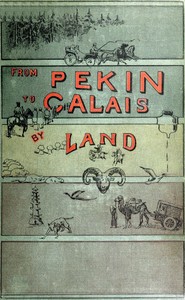
From Pekin to Calais by Land by Harry De Windt
Published in 1889, From Pekin to Calais by Land is Harry de Windt's personal record of an outrageous journey. It started with a wager: could he travel from China to France without setting foot on a ship? With that goal, he left Beijing (then called Pekin) and headed north into Mongolia and the brutal Gobi Desert, then pushed into the vast, frozen emptiness of Siberia. His route took him across the remote Russian steppes, through European Russia, and finally to the French coast at Calais. The book is his diary of that punishing trip—a raw, unfiltered look at the challenges of long-distance travel in an age before GPS, reliable roads, or international tourism.
The Story
De Windt doesn't waste time on poetic descriptions. He jumps right into the struggle. Each chapter feels like another obstacle. He writes about bargaining for camels in desert markets, surviving blizzards that erased the trail, and dealing with local governors who saw him as a spy or a nuisance. The tension isn't manufactured; it comes from real danger. Would his food run out? Would his guides abandon him? Would he freeze to death in a Siberian hut? The narrative is propelled by these immediate, physical threats. It's a straightforward chronicle of endurance, filled with strange encounters, moments of unexpected kindness, and a lot of very cold nights.
Why You Should Read It
What makes this book special is its authenticity. De Windt isn't a heroic figure. He's often frustrated, scared, and in over his head. That makes his successes feel earned. You get a real sense of the world as it was—not through historical analysis, but through the eyes of a man trying to buy a meal or find a place to sleep. His observations on the cultures and people he meets are sometimes insightful, sometimes prejudiced by his time, which is itself a fascinating window into the Victorian mind. Reading it feels like discovering a dusty, thrilling adventure journal in an attic.
Final Verdict
This is a perfect pick for readers who love real-life adventures, armchair explorers, and anyone interested in 19th-century travel writing. It's not a flowery, romantic tale. It's gritty, direct, and surprisingly fast-paced. If you enjoy stories like Into the Wild or classic explorers' accounts, but want something with a rougher, more urgent edge, de Windt's mad dash across continents will absolutely captivate you. Just make sure you're reading it by a warm fire.
The copyright for this book has expired, making it public property. Access is open to everyone around the world.
Nancy Wright
6 months agoAs someone who reads a lot, the author's voice is distinct and makes complex topics easy to digest. Highly recommended.







Kenneth Gonzalez
1 year agoFinally a version with clear text and no errors.