
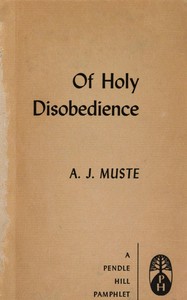
Of holy disobedience by A. J. Muste
Don't come to Of Holy Disobedience looking for a plot in the traditional sense. This is a manifesto, a passionate essay born from the fires of the 20th century's greatest conflicts. A.J. Muste, a pastor and pacifist activist, wrote this as a direct challenge to the Cold War mindset. He saw a world preparing for nuclear annihilation and called it a form of collective madness. The 'story' here is the argument itself: a step-by-step case for why Christians (and, by extension, all people of conscience) have a moral duty to refuse participation in war and the systems that lead to it.
The Story
Muste lays out his case with clear, forceful logic. He starts by examining the idea of obedience—to God, to the state, to the 'way things are.' He then makes his central point: there is a point where these authorities conflict. When the state demands you support war or injustice, blind obedience becomes a sin. 'Holy disobedience' is the conscious, nonviolent choice to follow your conscience instead. He walks through the practical and spiritual consequences of this choice, from facing social scorn to the inner peace of living in integrity. The narrative arc is the journey from passive acceptance to active, peaceful resistance.
Why You Should Read It
What struck me most wasn't the politics, but the profound personal challenge. Muste isn't just talking about protesting armies; he's talking about the everyday compromises we make. It forced me to ask: Where in my own life am I obeying out of fear or convenience? His writing isn't angry or preachy; it's urgent and compassionate. He understood the cost of his stance and respected that cost. Reading this feels like a conversation with a deeply principled, slightly weary, but unwavering friend who believes you can be braver than you think.
Final Verdict
This book is a quiet powerhouse. It's perfect for anyone feeling disillusioned with politics, for activists searching for a spiritual foundation for their work, or for readers of history who want to understand the soul of the peace movement. If you liked the moral clarity of Dr. King's 'Letter from a Birmingham Jail,' you'll find a kindred spirit here. It's short, but it's not a quick read—you'll need to pause and wrestle with it. Keep it on your shelf for when the world feels too noisy and you need a reminder of what quiet, stubborn conviction looks like.
This digital edition is based on a public domain text. Distribute this work to help spread literacy.
Emma Williams
1 year agoThe index links actually work, which is rare!







Ava Hernandez
1 year agoThanks for the recommendation.