
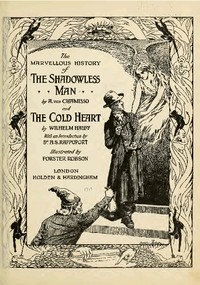
The Marvellous History of the Shadowless Man, and The Cold Heart by Chamisso et al.
Let's crack open this old volume. 'The Marvellous History of the Shadowless Man' and 'The Cold Heart' are two separate stories, but they feel like two sides of the same dark coin. Both are about Peters who make a deal that ruins them.
The Story
First, we meet Peter Schlemihl. He's down on his luck when he meets a strange, calm man who can produce anything from his pocket. This man offers Schlemihl a fortune—a magic purse that never empties—in exchange for his shadow. Schlemihl, thinking a shadow is useless, agrees. Big mistake. He soon discovers his shadow is everything. Without it, he looks wrong. Children scream. Society rejects him. His wealth means nothing because he can't show his face in public. He becomes a rich, utterly lonely outcast, forever fleeing the man who bought his shadow and wants to collect the rest of him.
Then, in the Black Forest, we get Peter Munk. He's a poor charcoal burner who envies the rich men in town. He meets a forest spirit and trades his living heart for a heart of stone, gaining immense wealth in return. But the cold heart turns him cruel. He ruins his mother, abandons his loving wife, and feels nothing. The money is ashes in his mouth because he can't enjoy any of it. His story is about whether it's too late to undo such a catastrophic trade.
Why You Should Read It
What got me was how painfully human these Peters are. Their initial desires aren't evil—who hasn't wanted financial security or a leg up in the world? Hauff doesn't judge them for wanting more; he shows the brutal cost of getting it the wrong way. The horror isn't in monsters, but in everyday reactions. A missing shadow. An emotionless stare. These are the things that make people turn away. The stories are slow-burn psychological thrillers. You keep reading, heart in your throat, wondering how (or if) they can possibly fix this.
Final Verdict
This is perfect for anyone who loves a smart, gothic-tinged fairy tale. If you enjoy the moral puzzles of stories like Dr. Faustus or the eerie vibes of early German Romanticism (think brothers Grimm, but more philosophical), you'll fall right into this. It’s also a surprisingly quick read. The language is clear, the dilemmas are gripping, and the questions it raises about identity, community, and the price of ambition stick with you. Don't let the 19th-century publication date fool you—this feels urgently modern.
The copyright for this book has expired, making it public property. It is available for public use and education.

Aiden Lewis
9 months agoI was skeptical at first, but the narrative structure is incredibly compelling. I couldn't put it down.