
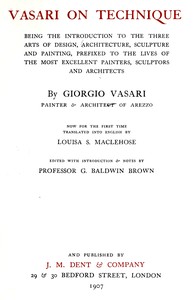
Vasari on technique : Being the introduction to the three arts of design,…
Don't go into this book expecting a novel or a straight biography. It's something much more raw and immediate. Imagine the most famous art historian of the 16th century putting down his pen, rolling up his sleeves, and saying, 'Okay, let's talk shop.' That's the vibe.
The Story
There's no traditional plot here. Instead, Vasari structures his guide like a master teaching an apprentice. The book is divided into three main sections, mirroring the 'arts of design' he mentions in the title: Architecture, Sculpture, and Painting. For each one, he gets incredibly specific. He doesn't just say 'build a wall'; he gives you the exact proportions of sand, lime, and water for the perfect mortar. He explains how to choose a block of marble by listening to its ring when struck, how to construct wooden frameworks for vaults, and how to mix paints that will last for centuries. He pulls back the curtain on every step, from quarrying stone to applying the final varnish. It's a systematic breakdown of the entire creative process, told with the authority of someone who lived it.
Why You Should Read It
This book completely changes how you see Renaissance art. It transforms those distant, god-like geniuses into practical problem-solvers. When you learn about the painstaking process of fresco—painting on wet plaster, racing against the clock before it dries—Michelangelo's Sistine Chapel ceiling becomes an almost superhuman feat of endurance and planning. Reading about the dangers of bronze casting (think giant pots of molten metal) makes any surviving sculpture feel like a miracle. Vasari gives you a profound respect for the craft. The magic isn't diminished; it's grounded in real, tangible skill. You start to appreciate the art not just for its beauty, but for its sheer making.
Final Verdict
This is a niche treasure, but an absolute gem for the right reader. It's perfect for artists, makers, and anyone fascinated by the 'how' behind great things. If you love historical reenactment, traditional crafts, or just geek out on process, you'll be in heaven. It's also fantastic for dedicated art lovers who feel like they've seen all the paintings and want to go deeper. A word of caution: it's dense with technical details. This isn't a breezy bedtime read; it's a workshop manual. But if you have that specific curiosity about the physical creation of the Renaissance, there's nothing else like it. You're not just reading about history—you're getting the original instructions.
This book is widely considered to be in the public domain. Feel free to use it for personal or commercial purposes.
David Jackson
1 year agoHaving followed this topic for years, I can say that the step-by-step breakdown of the methodology is extremely helpful for students. Simple, effective, and authoritative – what else could you ask for?
Donald Davis
11 months agoThe research depth is palpable from the very first chapter.
Emily Torres
1 year agoAmazing book.
Robert White
1 year agoUsed this for my thesis, incredibly useful.






Jessica Williams
11 months agoI appreciate the objective tone and the evidence-based approach.