
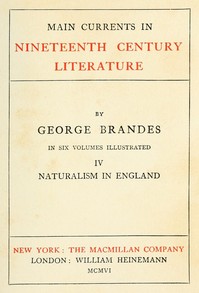
Main Currents in Nineteenth Century Literature - 4. Naturalism in England
Don't let the academic-sounding title fool you. Georg Brandes's book is a passionate argument about a seismic shift in how stories were told. He doesn't just list authors and dates. He builds a case for Naturalism as a powerful, new way of seeing the world through fiction.
The Story
There's no traditional plot here. Instead, Brandes maps out a battlefield of ideas. He sets the scene in a England dominated by Romanticism and moralistic tales. Then, he introduces the rebels: writers who believed fiction should be a tool for examining real life, with all its messiness. He shows how these authors began treating their characters not as symbols of good or evil, but as products of their social conditions, their heredity, and their moment in history. Brandes walks us through this transformation, pointing to key writers and their works as evidence. He highlights how settings became characters themselves—the oppressive city, the indifferent countryside—and how this new approach forced readers to confront uncomfortable truths about poverty, class, and human nature.
Why You Should Read It
This book made my old favorites feel new. Reading Brandes is like having a brilliant, slightly opinionated friend point out patterns you missed. He connects authors you might not think go together, showing a common thread running from the social critiques of Dickens to the psychological depth of George Eliot. His excitement is contagious. He wasn't a detached scholar; he was a critic in the thick of these debates, and his writing has that energy. He makes you see that the 'realism' we take for granted in novels was once a controversial and daring choice. It adds a whole new layer of appreciation when you go back to those classic stories.
Final Verdict
This is a perfect pick for curious readers who love 19th-century classics and want to understand the engine under the hood. It's for anyone who's finished a Victorian novel and thought, 'Why did they write like that?' It's not a light beach read, but it's far from a stuffy textbook. Brandes writes with a clear, persuasive voice that assumes you're smart and interested. If you enjoy connecting ideas and seeing the bigger picture behind art, you'll get a lot out of this. Pair it with a re-read of 'Hard Times' or 'Jane Eyre' and see the literature light up in a whole new way.
This text is dedicated to the public domain. You do not need permission to reproduce this work.




Donald Lopez
10 months agoGreat reference material for my coursework.